
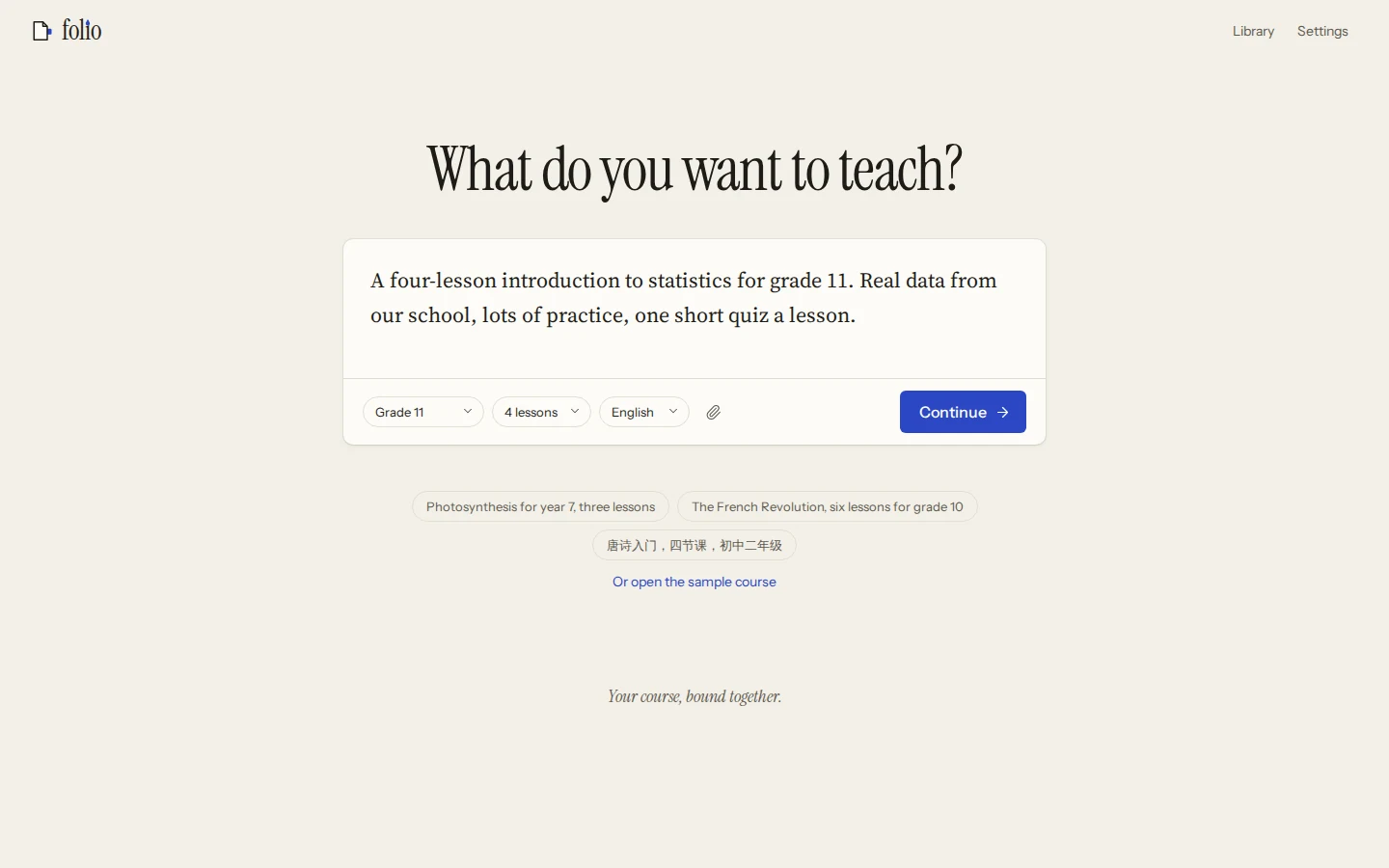
Say what you teach, in a line. Folio asks only what the line left out, outlines the course for you to change, then writes every material for every lesson, checked before it reaches you.
Your course, bound together. No sign-up needed to start.
FEATURED FILM
Folio
Product film · 1:56 · 4KSociology, calculus, and algorithms, each a real build on the live site, shown faster. One line in; every material out.
Watch on YouTubeHOW IT HOLDS TOGETHER V0.0.43
Checked, then yours
Folio shows what a program worked out, and what is yours to check. Every word stays yours to change.
Asks first
Clarifying questions only when the brief leaves something out. Then an outline you change before anything is written.
Two models
One writes the course. A second reviews every lesson plan before you see it.
Worked, not guessed
Numbers are computed by a program. Code on a slide is actually run.
Changes ripple
Edit one thing and what depends on it is marked for updating. Your own edits are kept.
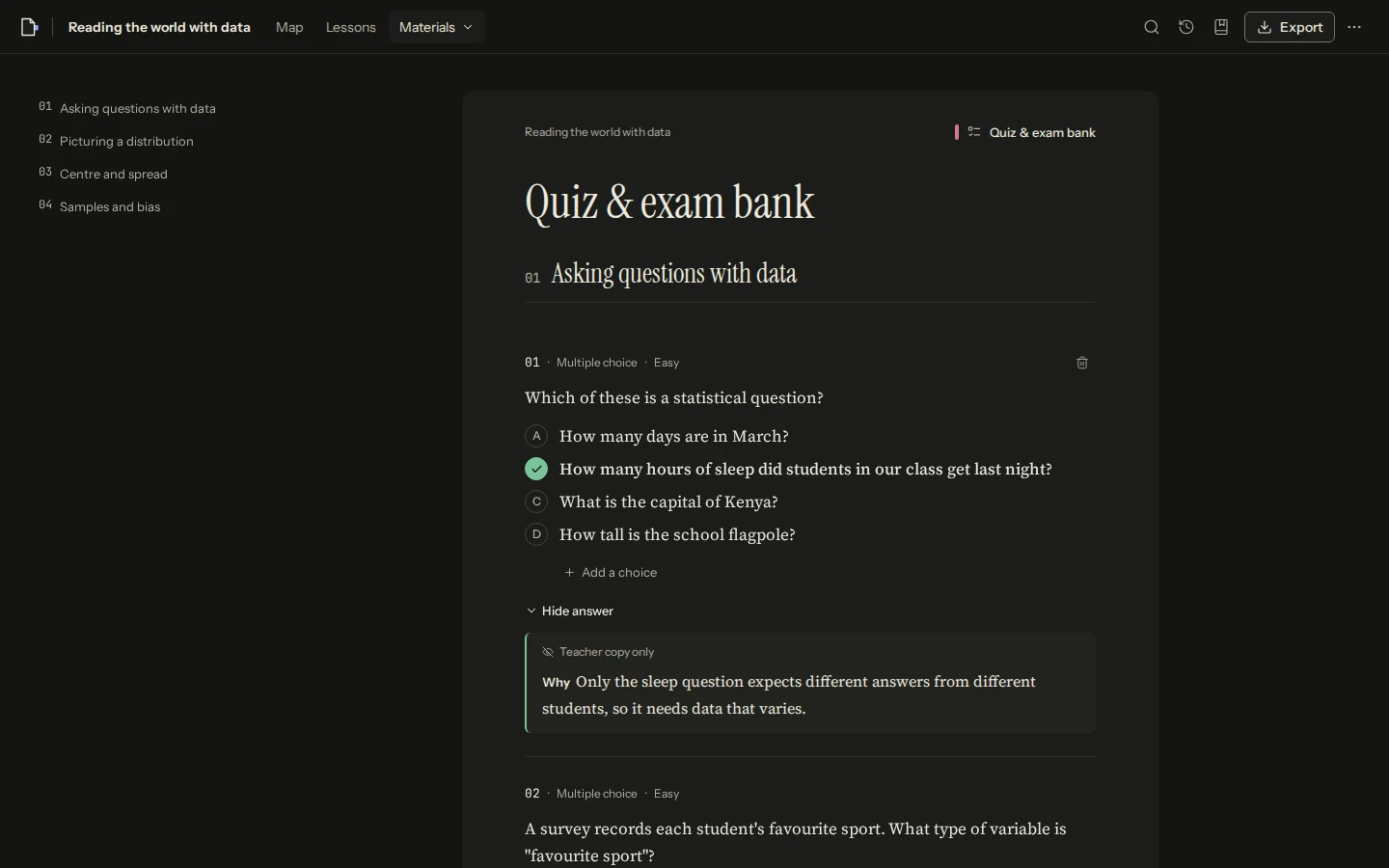
What it does
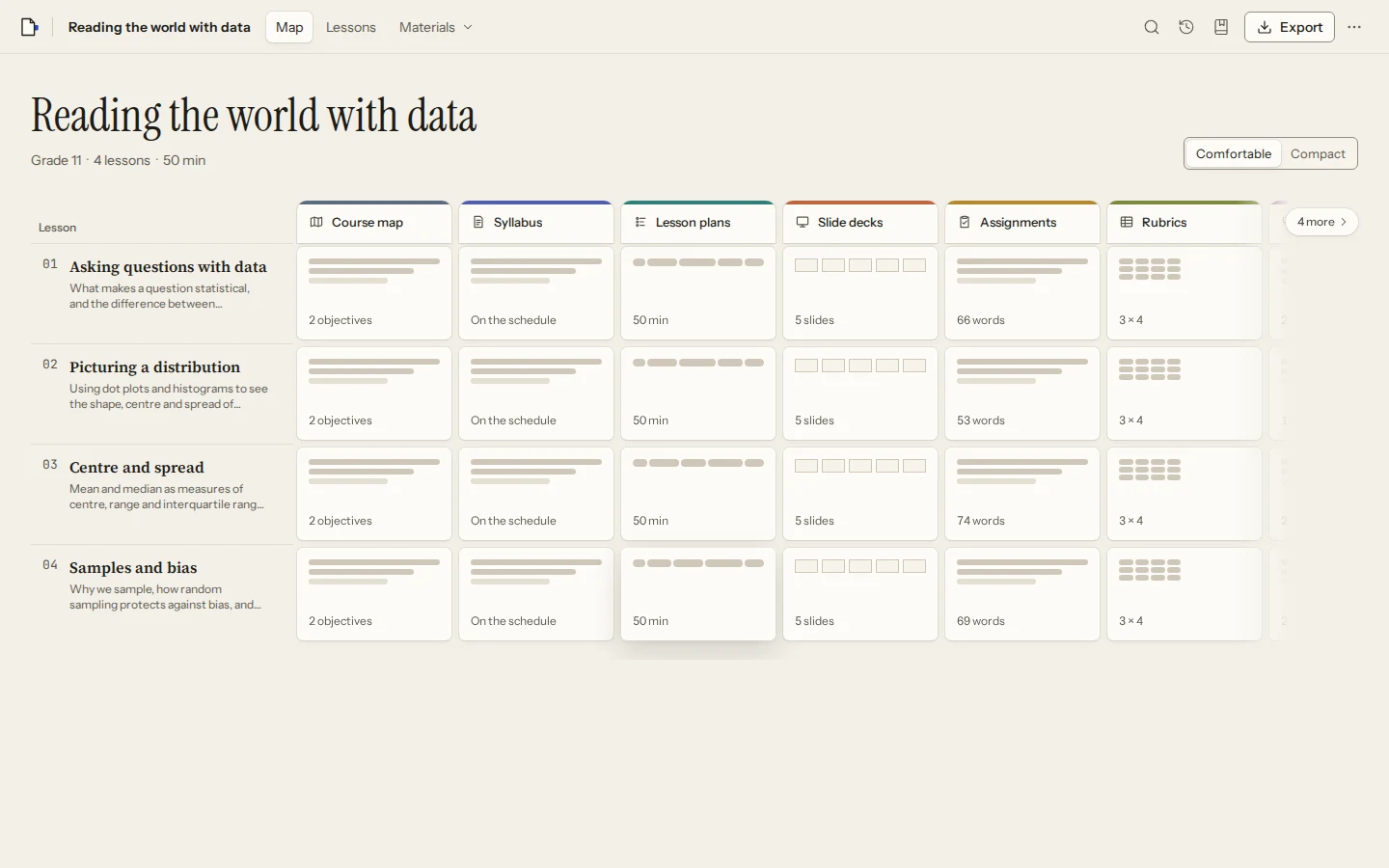
Every material, every lesson
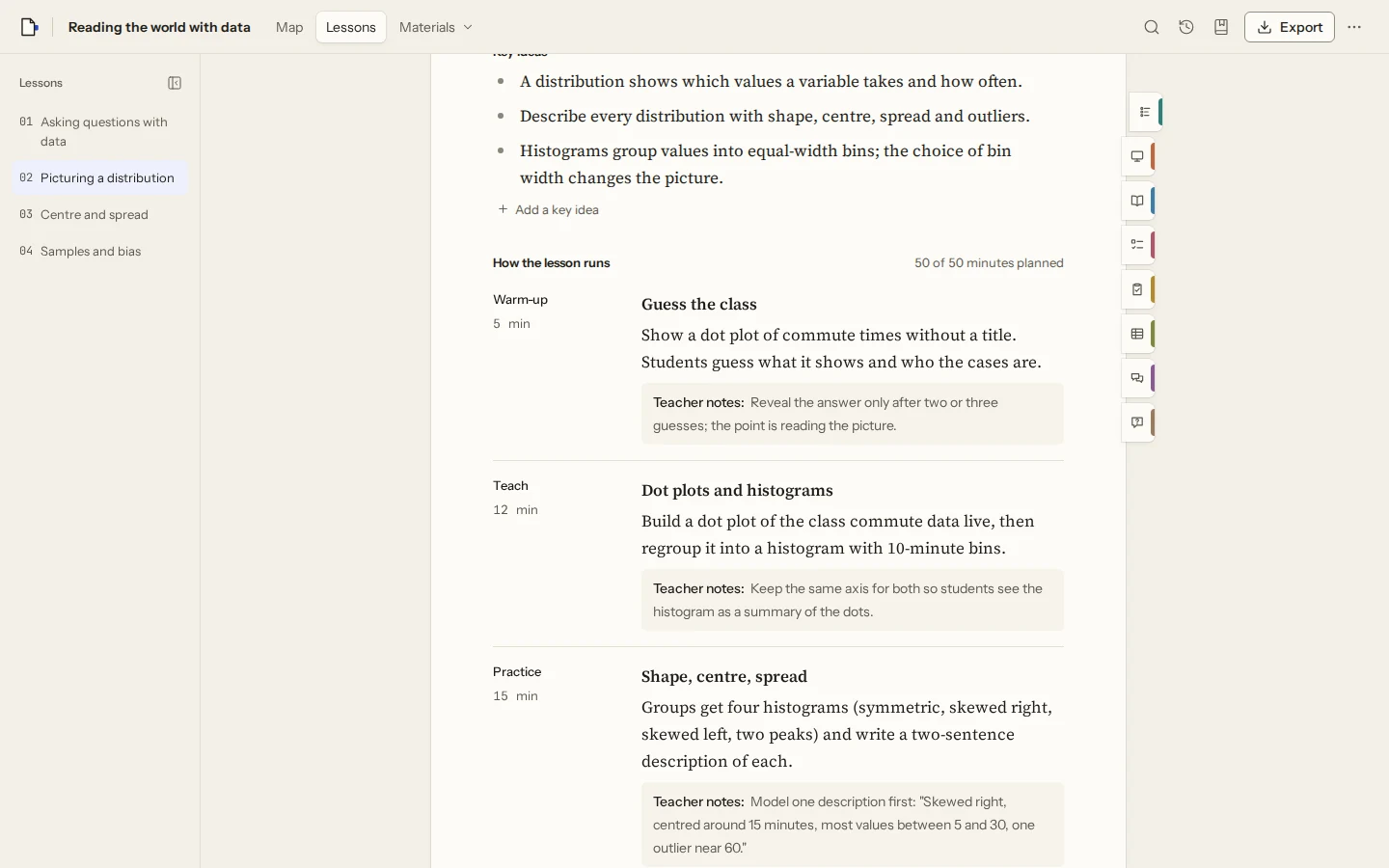
Syllabus, lesson plans with minutes and notes, slides, handouts, assignments and rubrics, quiz bank, discussions, study guides, and FAQ.
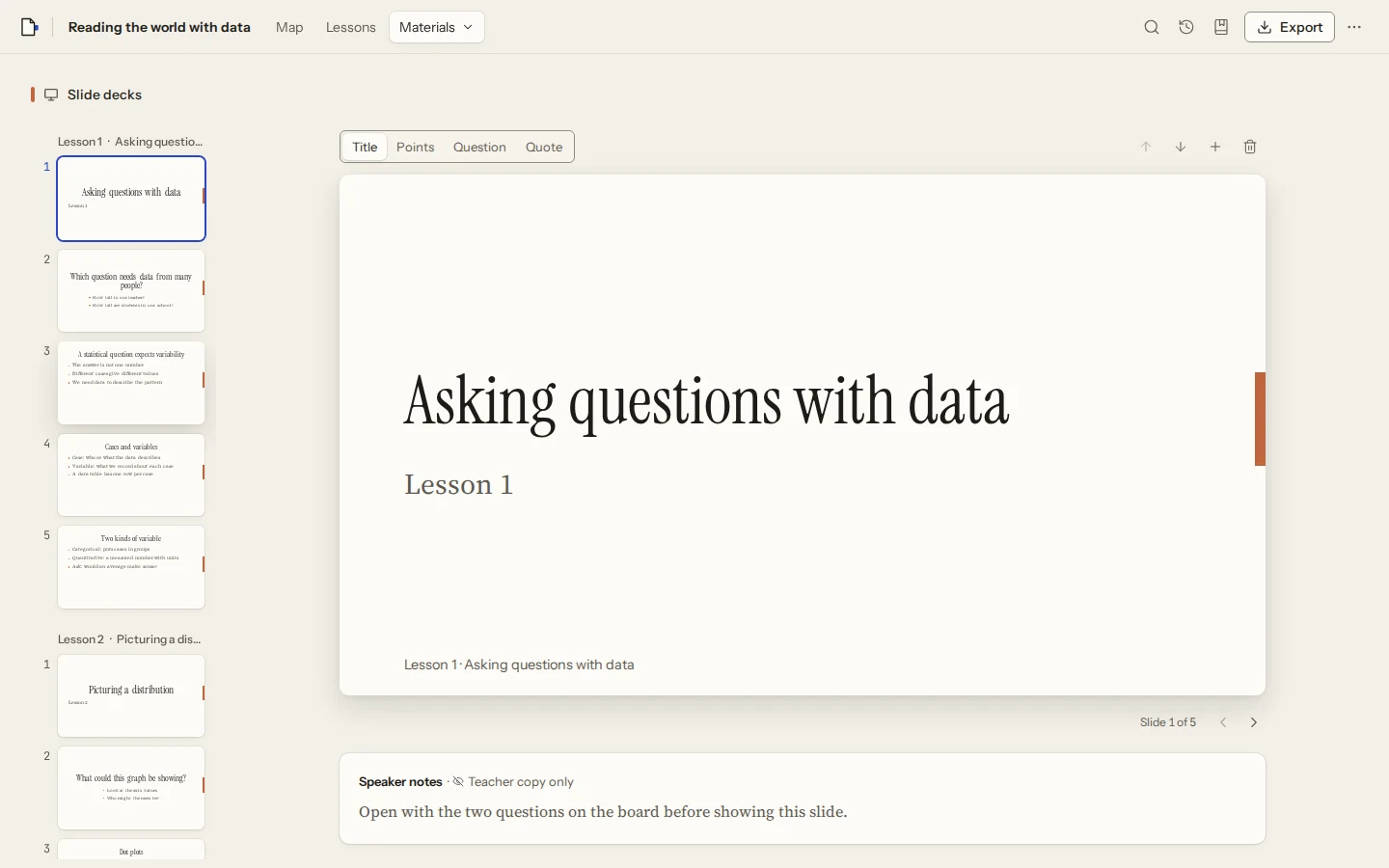
Slides that teach
Tables, charts, step chains, side-by-side comparisons, and methods shown as they run.
Ask for a change in words
⌘K edits the whole course and shows what it will write, and what that costs, first.
THE FIRST GENERATION V0.20.08
EduTool.dev
Folio began as EduTool: one description in, ten linked materials out, checked by Scion, a model that ran privately in the browser.
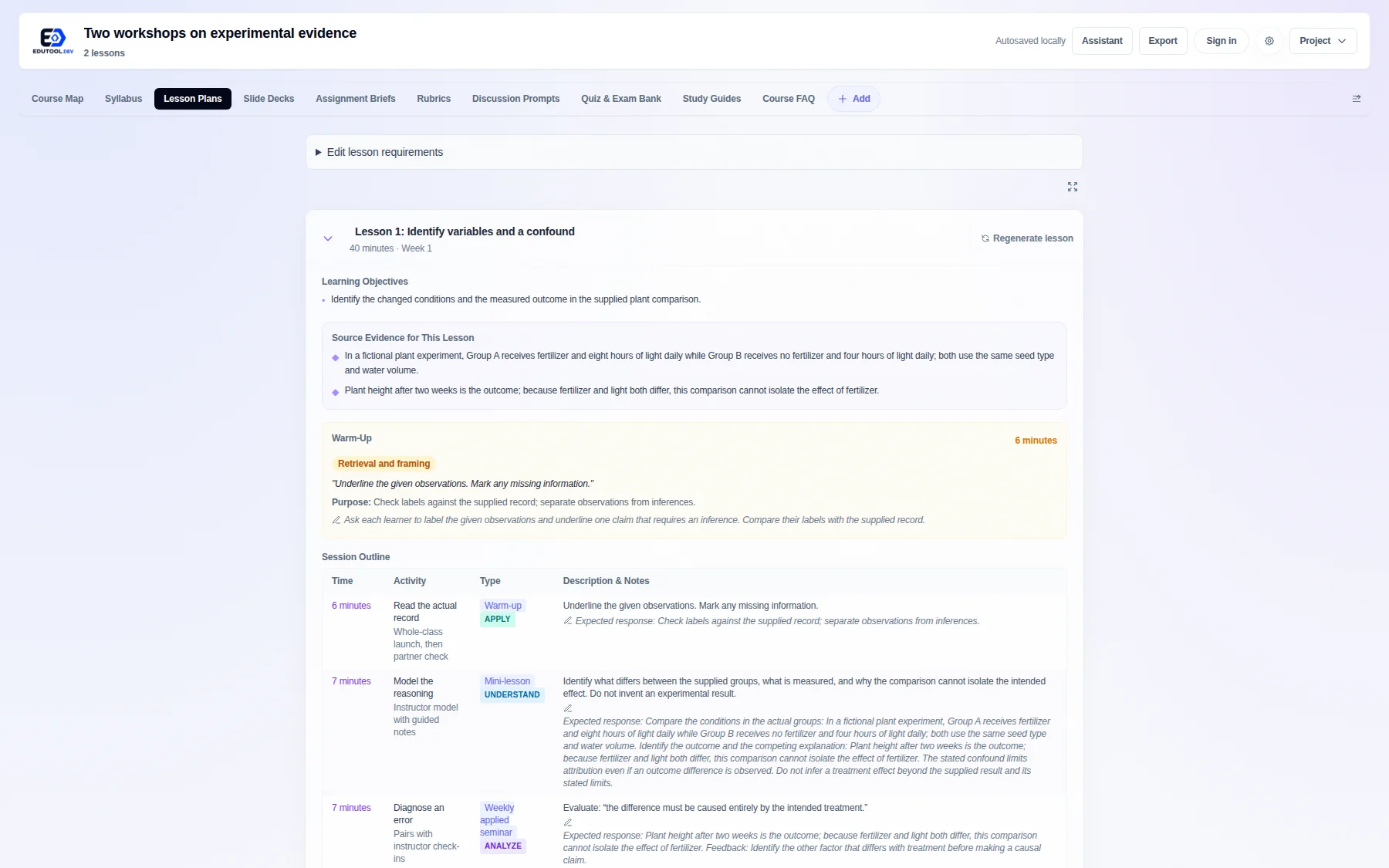
What it proved
Teachers want a whole course, not a wall of AI text, and their own poems, dialogues, and data must stay verbatim.
What it taught
Materials written side by side drift apart, and one small model can only check so much. Folio fixes both.
What carried over
Ten materials, one brief, computed answers, and honesty about what still needs a teacher’s review.
CASE STUDY
Behind the work
Write the whole course. Show what was checked, and what is yours to check.
EduTool proved teachers want a whole course, not a wall of AI text. But its materials were written side by side, so one edit could leave the rest quietly out of date, and a single small model could only check so much.
Product strategy, UX, design system, architecture, AI pipeline, front-end, film, and release.
Independent. Designed, built, and shipped end to end.
02Key decisions
- Every material is built from one course document, so a change knows what it affects.
- Ask clarifying questions only when the brief is unclear. A clear brief gets none.
- Split the work between models: one writes, a second reviews every plan.
- Answers are computed by a program, and R and Python code is actually run.
03Limits & misses
- Built for North American classrooms; courses are written in English.
- Software checks are not classroom readiness, so each lesson carries a “Yours to check” list.
- Real models cost money: Folio credits, your own key, or a local model.
04Results
- Live at folio.university, at v0.0.43.
- A 15-lesson course builds in about four to seven minutes.
- Exports to Word, native PowerPoint, PDF, Google Docs, and QTI, with separate student and teacher copies.
- 1,176 unit tests and 167 browser tests, under a 150 KB first-load budget.
05What I built
- Course schema, change tracking, history and undo, and cross-material checks.
- Multi-model pipeline, credits, sync, and the release pipeline.
- The “paper and ink” design system, every screen, the exporters, and the launch film.